Source High Precision Liquid Level Gauge for Tanks, Pipes, and Silos
Find and compare 30 high precision liquid level gauge options from Hefei suppliers. Buyers can evaluate models like magnetic and radar types with varying pressure ratings, accuracy levels, and connection sizes for industrial applications.
Key considerations
Products List




Comprehensive Sourcing Guide
Strategic Sourcing Guide for High Precision Liquid Level Gauges
Procuring high-precision liquid level gauges requires a rigorous approach that balances technical specifications with supply chain reliability. In the industrial sector, accurate level measurement is critical for process safety, inventory management, and operational efficiency. The market offers a diverse array of technologies, ranging from magnetic and radar-based systems to magnetostrictive displacement sensors. Buyers must navigate these options by focusing on verified product attributes, understanding the cost drivers inherent in specialized manufacturing, and establishing robust quality control protocols. This guide outlines the essential factors for sourcing these instruments effectively, relying on observed market data and technical facts to inform decision-making.
Technical Specifications and Technology Selection
The first step in sourcing is identifying the appropriate measurement technology based on the specific application environment. The market currently features distinct categories, including magnetic flap gauges, radar level meters, and magnetostrictive displacement sensors. Each technology serves different needs regarding accuracy, medium compatibility, and installation constraints.
Magnetic flap gauges are characterized by their robust mechanical design and visual indication. These devices often utilize a magnetic principle where a float moves within a tube, actuating external indicators. Observed specifications for these units include a measurement accuracy of ±8mm for general models and ±3mm for high-precision variants. The working pressure for these systems can range from full vacuum up to 420 Bar, with temperature ranges extending from -160°C to +450°C. Materials are critical here; conventional options include 304 stainless steel, while other materials like 316L, PFA, PP, and Hastelloy C are available for corrosive or high-purity applications. The display typically consists of local magnetic flaps in red and white, providing immediate visual feedback without external power.
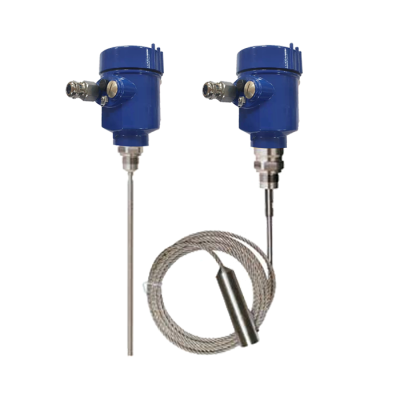
Radar level meters offer non-contact measurement solutions suitable for challenging environments. These devices operate at specific frequencies, such as 6.8GHz, to ensure reliable signal reflection. The measuring range for cable-type radar can extend up to 30 meters, while rod and coaxial types typically cover 0-6 meters. High-precision radar units boast resolutions as fine as 1mm and accuracy levels of 0.2% or even better, with some models claiming accuracy below 0.1%. These sensors often feature echo sampling rates of 55 times per second, ensuring rapid response speeds greater than 0.2 seconds. The process connection sizes vary, commonly including G1½a, G2a, 1½NPT, and flange options like DN50, DN80, DN100, and DN150.
Magnetostrictive displacement sensors provide linear displacement measurement with high repeatability. These sensors utilize a semi-conductor integrated production process and offer stroke lengths ranging from 25mm to 6000mm. The output is typically a 4-20mA current signal, compatible with standard industrial control systems. While the resolution depends on the specific output configuration, these units are designed for applications requiring precise linear tracking.
| Feature | Magnetic Flap Gauge | Radar Level Meter | Magnetostrictive Sensor |
|---|---|---|---|
| Measurement Principle | Magnetic Sensors | Radar (6.8GHz) | Magnetostrictive |
| Typical Accuracy | ±3mm to ±8mm | 0.2% to <0.1% | Resolution varies |
| Pressure Rating | Full Vacuum to 420 Bar | -1 to 40 Bar | Depends on model |
| Temperature Range | -160°C to +450°C | -40°C to -80°C (Env) | Standard industrial |
| Output Signal | Visual (Flaps) | 4-20mA, Hart Protocol | 4-20mA Current |
| Max Range | Variable | 0-30m (Cable) | 25-6000mm (Stroke) |
Compliance and Certification Verification
When sourcing industrial instrumentation, verifying compliance with international standards and certifications is paramount. While specific standards like IEC 61508 and IEC 61511 are often referenced in the broader context of functional safety, buyers must confirm the actual certification status of the specific unit they intend to purchase. In the observed market data, CE certification is explicitly listed for certain models, indicating compliance with European health, safety, and environmental protection standards.
Buyers should not assume that all products in a category meet these standards. Instead, the procurement process must include a direct request for the Certificate of Conformity (CoC) and specific test reports for the model in question. For applications involving hazardous areas or critical process control, additional certifications such as ATEX or SIL (Safety Integrity Level) ratings may be required. The absence of a specific certification in the product listing should be treated as a gap that requires immediate clarification from the supplier. Furthermore, the "All in One" structure of some sensors simplifies compliance by integrating the sensor and transmitter, reducing the potential points of failure and simplifying the certification scope.
Cost Drivers and Pricing Analysis
The pricing of high-precision liquid level gauges is influenced by a complex matrix of factors, including material composition, measurement technology, and customization requirements. The observed price range in the market spans from $0.80 to $25,800, reflecting the vast difference between basic mechanical indicators and advanced, fully integrated electronic systems.
Material costs are a primary driver. Units constructed from standard 304 stainless steel are generally more affordable than those utilizing 316L, Hastelloy C, or specialized plastics like PFA and PP. These exotic materials are necessary for handling aggressive chemicals or high-purity processes, directly impacting the unit cost. Additionally, the complexity of the electronics plays a significant role. Radar sensors with Hart communication protocols and high sampling rates command a premium over simple magnetic flap gauges. Customization is another major cost factor; while many suppliers offer customized connection sizes, packing, and models, these bespoke requirements often incur higher unit prices and longer lead times compared to standard off-the-shelf configurations.
Typical Industrial Applications
High-precision liquid level gauges are deployed across a wide spectrum of industries, each with unique operational demands. The magnetic flap gauge, with its ability to withstand pressures up to 420 Bar and temperatures from -160°C to +450°C, is ideal for the petrochemical and oil and gas sectors where extreme conditions are common. The visual nature of the magnetic flap makes it particularly useful for on-site verification in remote or hazardous locations where electronic monitoring might be compromised.
Radar level meters are frequently specified for the water and wastewater treatment industry, as well as for bulk storage in the chemical and food processing sectors. Their non-contact nature prevents contamination of the product, which is critical for food-grade applications. The ability to measure up to 30 meters makes them suitable for large storage tanks. Meanwhile, magnetostrictive displacement sensors, with their long stroke capabilities up to 6000mm, are often found in hydraulic systems, large storage tanks, and applications requiring precise linear position feedback. The 4-20mA output ensures seamless integration into Distributed Control Systems (DCS) and Programmable Logic Controllers (PLC).
Supplier Evaluation and Origin Considerations
Evaluating a supplier involves more than just reviewing product specifications; it requires assessing their manufacturing capabilities and geographic origins. The observed data indicates that a significant portion of these products originates from Hefei, a hub for industrial instrumentation in China. While this location suggests a mature supply chain, buyers must conduct due diligence regarding the specific factory's quality management systems.
Key evaluation criteria should include the supplier's ability to provide customization, as evidenced by the availability of customized connection sizes, packing, and models. The Minimum Order Quantity (MOQ) is another critical factor, with observed ranges spanning from 1 to 299 units. Suppliers offering low MOQs are preferable for pilot projects or small-scale deployments, while those with higher MOQs may offer better economies of scale for large contracts. Buyers should also verify the warranty terms, with a standard 1-year warranty being a common baseline. It is essential to confirm that the supplier provides clear documentation on the production process, such as the semi-conductor integrated manufacturing for sensors, to ensure consistency in performance.
Quality Control and Long-Term Procurement
Establishing a robust quality control framework is essential for mitigating risks associated with long-term procurement. Buyers should insist on pre-shipment testing that validates the claimed accuracy, such as the ±0.1% or ±0.2% repeatability figures. For magnetic gauges, verifying the pressure rating and temperature range under actual operating conditions is crucial. The IP rating, often listed as IP (with specific numbers to be confirmed), indicates the degree of protection against dust and water ingress, which is vital for outdoor or washdown applications.
Long-term procurement considerations extend beyond the initial purchase. Buyers must evaluate the availability of spare parts, the ease of maintenance, and the supplier's support for calibration. The "All in One" design of some sensors reduces maintenance complexity, but the electronic components still require periodic verification. Additionally, the communication protocols, such as Hart, should be compatible with the buyer's existing infrastructure to avoid costly retrofitting. Packaging is also a factor; wooden packing is observed for certain high-value items, ensuring protection during transit, but buyers should confirm if this meets their specific logistics requirements.
In conclusion, sourcing high-precision liquid level gauges requires a meticulous approach that prioritizes verified technical data, compliance documentation, and supplier reliability. By carefully analyzing the trade-offs between different technologies, understanding the cost drivers related to materials and customization, and implementing strict quality control measures, buyers can secure instruments that ensure operational safety and efficiency. The diversity of the market, from simple magnetic indicators to advanced radar and magnetostrictive systems, offers solutions for nearly every industrial challenge, provided that the selection process is grounded in rigorous fact-checking and strategic evaluation.
FAQs
What accuracy levels are available for high precision liquid level gauges?
Accuracy ranges from ±3mm to ±8mm for magnetic gauges and 0.2% to less than 0.1% for radar models. Specific resolution depends on the sensor type, with some units offering 1mm resolution and others varying based on output configuration.
Which materials are used for high precision liquid level gauges?
Conventional materials include 304 and 316 stainless steel. Other options like 316L, PP, PFA, and Hastelloy C are available for corrosive or high-purity applications to ensure durability and chemical resistance in harsh environments.
How do temperature and pressure ratings vary across different gauge types?
Magnetic gauges operate from -160°C to +450°C with pressures up to 420 Bar. Radar sensors typically handle process pressures between -1 and 40 Bar, while environmental temperatures for some units range from -40°C to -80°C.
Can I find customized connection sizes and packing for these gauges?
Yes, customized connection sizes, models, and packing are available for most high precision liquid level gauges. Buyers can specify flange or thread mounts and request wooden packing for high-value items to ensure safe transit.
What output signals and protocols do these sensors support?
Most sensors provide 4-20mA current output, with some supporting Hart communication protocols. Magnetostrictive sensors also use linear displacement measurement with current output to integrate seamlessly into standard industrial control systems.
Where are these high precision liquid level gauges typically manufactured?
A significant portion of these products originates from Hefei, China. This location hosts a mature supply chain for industrial instrumentation, though buyers should verify specific factory quality management systems and certification status before purchasing.
What certifications are available for high precision liquid level gauges?
CE certification is explicitly listed for certain models, indicating compliance with European safety standards. Buyers must request specific certificates of conformity as not all products automatically meet functional safety standards like IEC 61508.